



Quick answer
The right pillow depends on three things: your sleeping position, the problem you want to solve, and the material. Side sleepers need a higher, firmer pillow; back sleepers a medium pillow with neck support; stomach sleepers a thin, soft one. For specific needs, choose a specialty pillow: a wedge for acid reflux or reading, a knee pillow for hip and lower back pain, or a contour pillow for neck pain. Replace most pillows every 1 to 2 years.
Key takeaways
- Sleeping position decides pillow height: the goal is to keep your head, neck and spine in a straight line.
- Specialty pillows solve specific problems: wedges, knee pillows, leg wedges, lumbar and contour pillows each target a different need.
- Stacking regular pillows is not a substitute for a wedge: Mayo Clinic notes that raising your head with extra pillows isn't effective for acid reflux.
- Material affects support, temperature and lifespan: latex lasts 2 to 4 years, memory foam 2 to 3 years, polyester as little as 6 months.
- Most pillows should be replaced every 1 to 2 years, or sooner if they sag, go lumpy, or you wake up with a sore neck.
How to choose the right pillow in 5 steps
To choose the right pillow, match its height and firmness to your sleeping position, then pick a shape that targets any pain or health issue you have. These five steps cover every decision:
- Identify your main sleeping position. Side, back or stomach. This sets the height (loft) you need.
- Define the problem you want to solve. Neck pain, lower back pain, hip pain, acid reflux, snoring, swollen legs, or simply better comfort.
- Choose the shape. A standard pillow for the head, or a specialty pillow (contour, wedge, knee, leg, lumbar, body pillow) for a specific need.
- Choose the material. Memory foam for contouring, latex for bounce and durability, shredded fills for adjustability, cooling foams for hot sleepers.
- Check size, cover and care. Look for a removable, washable, hypoallergenic cover and a size that fits your body and bed.
Not sure whether your current pillow is the problem? Read Could Your Pillow Be Impacting Your Sleep and Health?
Pillow types compared
Each pillow type is designed for a different need. Use this table to find the right one, then follow the link for a complete guide.
| Pillow type | Best for | What it solves | Our option | Full guide |
|---|---|---|---|---|
| Contour / cervical | Back and side sleepers | Neck pain, stiff neck, neck alignment | Confourm Neck Memory Foam Pillow | Neck & shoulder guide |
| Adjustable shredded | Combination sleepers; unsure of height | Wrong pillow height | Organic Shredded Pillow | Pillows for side sleepers |
| Upper-body wedge | Back and side sleepers | Acid reflux, snoring, breathing comfort | Acid Reflux Wedge | How to use a wedge |
| Side sleeping wedge system | Side sleepers | Reflux plus hip and back alignment on the side | Side Sleeping Wedge Pillow | How to use a wedge |
| Knee pillow | Side sleepers | Hip pain, lower back pain, sciatica | The Knee T | Knee pillow guide |
| Leg wedge | Back sleepers | Lower back pressure, leg swelling, circulation | The Angle / The Leg Wedge Pillow | Leg wedge guide |
| Reading / backrest system | Sitting up in bed or on the couch | Unsupported back when reading or using a laptop | The Angle Body System | Reading wedge guide |
| Lumbar support | Sitting, driving, back sleepers | Lower back curve support | Premium Sacro-Ease (car) | Lumbar pillow guide |
| Body pillow | Side sleepers, pregnancy | Full-body alignment; stops rolling onto the stomach | Better Body Pillow | Body pillow guide |
| Cooling pillow / topper | Hot sleepers | Heat buildup at night | SoCool Foam Mattress Topper | Cooling pillows guide |
The best pillow for your sleeping position
The best pillow keeps your head in a neutral line with your spine in the position you sleep in most. That means different heights for different sleepers.
Side sleepers
Side sleepers need the highest and firmest pillow, because it must fill the space between the ear and the outside of the shoulder. A pillow that is higher under the neck than under the head keeps the neck straight. Adding a knee pillow keeps the hips and lower back aligned too. Read Best Pillows for Side Sleepers.
Back sleepers
Back sleepers need a medium-height pillow that supports the curve of the neck without pushing the head forward. Contour pillows and neck rolls work well. A pillow or leg wedge under the knees reduces pressure on the lower back.
Stomach sleepers
Stomach sleepers need a very thin, soft pillow, or none at all, to avoid bending the neck backward. Stomach sleeping is the hardest position on the neck and back, so many people use a body pillow to help them transition to side sleeping.
Combination sleepers
If you change positions during the night, an adjustable pillow with shredded fill lets you find a middle height that works on your back and side.
For pain-specific advice, see our complete guides: Neck & Shoulder Pain from Sleeping, How to Sleep with Lower Back Pain and Sciatica: Causes, Symptoms, Relief & How to Sleep With It.
Orthopedic pillows: who needs them?
An orthopedic pillow is a pillow shaped to support a specific part of the body, such as the neck, lower back, hips or legs, and keep the spine aligned. You may benefit from one if you wake up with pain, have a diagnosed spine or joint condition, or are recovering from surgery.
- Neck pain or stiffness: a contour or cervical pillow.
- Lower back, hip or sciatica pain: a knee pillow for side sleepers or a leg wedge for back sleepers.
- Recovery after surgery: a wedge or positioning pillow recommended by your care team.
- Long hours of sitting: a lumbar support pillow or seat support.
Learn more in Orthopedic Pillows: Choosing the Right One for Your Sleep Needs and Why Orthopedic Pillows are an Investment in Your Health.
Wedge pillows: uses and how to sleep on one
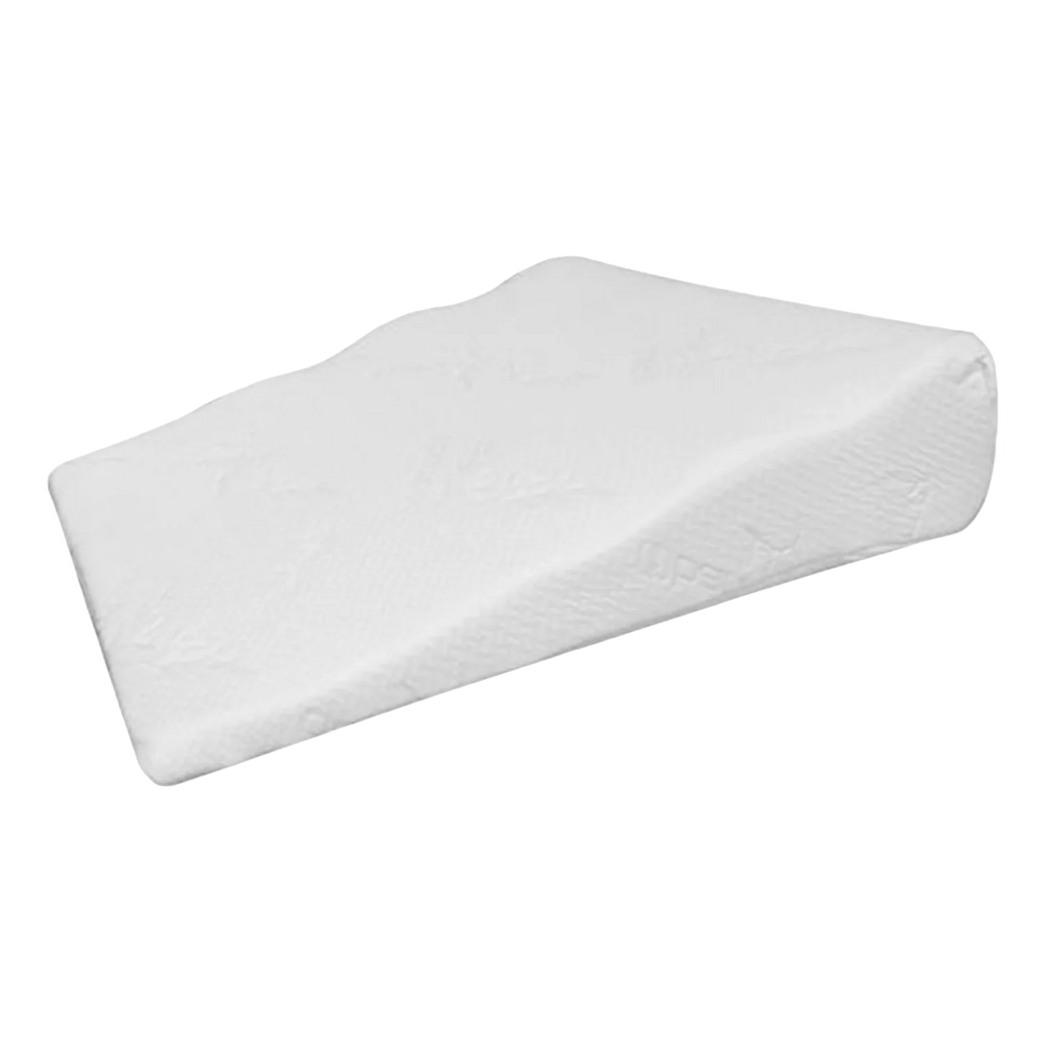
A wedge pillow is a triangular pillow that raises the upper body or the legs at a gentle, constant angle. Upper-body wedges are used for acid reflux, snoring, breathing comfort, reading and recovery after surgery.
For acid reflux, elevation works best when the whole torso is raised, not only the head. Mayo Clinic recommends raising the head of the bed 6 to 9 inches or using a wedge to elevate the body from the waist up, and notes that raising your head with extra pillows isn't effective.
How to sleep on a wedge pillow
- Place the wedge at the head of the bed with the thin end toward your waist.
- Lie back so your torso, not only your head, rests on the slope.
- Add a regular or contour pillow on top if you need more neck support.
- Support your knees with a pillow to stop sliding down during the night.
- Give it a few nights: sleeping at an incline takes some getting used to.
Step-by-step details: A Step-by-Step Guide on How to Use a Wedge Pillow.
Knee and leg pillows
Knee and leg pillows position the lower body to take pressure off the hips, knees and lower back. There are two main types:
- Knee pillows sit between the knees of side sleepers. They keep the top leg level with the hip so the pelvis and spine stay aligned. They are popular for hip pain, lower back pain, sciatica and pregnancy. See Choosing the Perfect Knee Pillow for Side Sleepers.
- Leg wedges raise the legs while you lie on your back. Some are designed to elevate the calves above the heart for circulation and swelling; others hold the knees bent to relax the lower back. See Achieve Ultimate Comfort and Relief with a Wedge Pillow for Legs.
Pillows for sitting up, reading and lumbar support
Regular bed pillows collapse when you sit up to read, watch TV or work on a laptop in bed, which leaves the lower back unsupported. A reading wedge or a backrest system holds its shape and keeps you upright with support behind the lower back.
- Reading wedges and backrests support the upper body at a sitting angle. See Choosing The Best Reading Wedge Pillow and Everything You Need To Know About A Pillow For Sitting Up In Bed.
- Lumbar support pillows fill the curve of the lower back in bed, in office chairs and in the car. See How To Choose The Best Lumbar Support Pillow.
For full upper and lower body support in bed or on the couch, a system like The Angle Body System combines a backrest with a leg support. For the car, see the McCarty's Premium Sacro-Ease Back Support.
Cooling pillows and mattress toppers
Cooling pillows and toppers use breathable materials or temperature-regulating foams to reduce heat buildup, which helps hot sleepers stay comfortable. Memory foam can trap heat, so cooling versions often use gel infusions, special foams, latex or breathable bamboo covers.
Our Confourm Neck Memory Foam Pillow is available with SoCool infused memory foam, and the SoCool Foam Mattress Topper adds temperature-regulating comfort to your mattress.
Pillow materials compared
The fill material decides how a pillow feels, how cool it sleeps and how long it lasts. Lifespans below are from the Sleep Foundation.
| Material | Feel | Temperature | Typical lifespan |
|---|---|---|---|
| Memory foam | Contours closely; relieves pressure; slow response | Can sleep warm (cooling versions available) | 2–3 years |
| Latex | Responsive and bouncy; supportive | Breathable | 2–4 years |
| Shredded foam or latex | Adjustable height and firmness | Airflow between pieces | Depends on fill (2–4 years for latex) |
| Down / feather | Soft and moldable; needs fluffing | Breathable | 1–3 years |
| Polyester fiber | Soft; flattens quickly | Varies | 6 months–2 years |
| Buckwheat | Firm and moldable | Very breathable | About 3 years |
When to replace your pillow
Most experts recommend replacing pillows every 1 to 2 years, according to the Sleep Foundation. Replace yours sooner if you notice any of these signs:
- You wake up with a sore neck or can't find a comfortable position.
- The pillow sags, stays flat or has lumps.
- It no longer springs back after you fold it in half (for down, feather and fiber pillows).
- It has visible yellowing or stains.
- Your allergies are worse at night.
Washing the pillowcase weekly and following the care instructions for the fill extends a pillow's life.
Our most recommended pillows
These Back Support Systems pillows cover the most common needs in this guide. All are made in the USA.


When a pillow isn't enough
A better pillow can reduce pain caused by poor sleep posture, but it does not treat medical conditions. See a doctor if pain lasts more than a few weeks, spreads into your arms or legs, comes with numbness or weakness, or if you have frequent heartburn, loud snoring with pauses in breathing, or swelling in your legs.
This article is for informational purposes only and is not a substitute for professional medical advice. Always consult your doctor or a qualified health provider about a medical condition.
Frequently asked questions
How do I choose the right pillow?
Start with your sleeping position: side sleepers need a high, firm pillow, back sleepers a medium pillow with neck support, and stomach sleepers a thin, soft pillow. Then choose a shape for any specific need, such as neck pain or acid reflux, and a material that fits your comfort and temperature preferences.
What type of pillow is best for neck pain?
A contour or cervical memory foam pillow is a good choice for most back and side sleepers with neck pain. It supports the natural curve of the neck and keeps the head level with the spine. Adjustable pillows are a good alternative if you are unsure of the right height.
Are wedge pillows good for sleeping every night?
Yes, many people sleep on a wedge pillow every night, especially for acid reflux, snoring or breathing comfort. It can take a few nights to get used to the incline. Support your knees with a pillow to avoid sliding down.
Do knee pillows really help?
Yes. For side sleepers, a knee pillow keeps the top leg level with the hip, which keeps the pelvis and lower spine aligned. This can reduce hip pain, lower back pain and sciatica discomfort at night.
What is an orthopedic pillow?
An orthopedic pillow is shaped to support a specific part of the body, such as the neck, lower back, knees or legs, and help keep the spine aligned. Common types include contour pillows, knee pillows, wedges and lumbar supports.
Is memory foam or latex better for a pillow?
Memory foam contours closely to the head and neck and relieves pressure, but can sleep warm. Latex is more responsive, breathable and durable, lasting 2 to 4 years versus 2 to 3 for memory foam. Shredded versions of both let you adjust the height.
Can I use regular pillows instead of a wedge for acid reflux?
Stacking regular pillows is not a good substitute. Mayo Clinic notes that raising your head with additional pillows isn't effective for reflux, because it bends the body at the waist instead of raising the whole torso. A wedge or raising the head of the bed 6 to 9 inches works better.
How often should I replace my pillow?
Most pillows should be replaced every 1 to 2 years. Latex can last 2 to 4 years and memory foam 2 to 3 years, while polyester pillows may last only 6 months to 2 years. Replace any pillow that sags, goes lumpy or leaves you with a sore neck.
Sources
- Mayo Clinic. GERD: Diagnosis and treatment.
- Sleep Foundation. How Often Should You Replace Your Pillows?
- Harvard Health Publishing. Say "good night" to neck pain.
- Mayo Clinic. Sleeping positions that reduce back pain.


