


Quick answer
The best way to sleep with lower back pain is on your side with your knees slightly bent and a pillow between your knees, or on your back with a pillow under your knees. Both positions keep your spine in a neutral line and take pressure off the lower back. Avoid sleeping on your stomach, and use a medium-firm mattress that does not sag.
Key takeaways
- Low back pain is extremely common: it affected 619 million people worldwide in 2020 and is the leading cause of disability, according to the World Health Organization.
- Side sleeping with a knee pillow keeps your hips, pelvis and spine aligned and is the most recommended position for lower back pain.
- Back sleepers should place a pillow or leg support under the knees to protect the natural curve of the lower back.
- Stomach sleeping is the position most often linked to back pain caused by sleep.
- A medium-firm mattress reduced pain-related disability more than a firm mattress in a randomized trial published in The Lancet.
- See a doctor if pain lasts more than a few weeks, spreads down the leg, or comes with numbness, weakness or fever.
What is lower back pain?
Lower back pain is pain, stiffness or muscle tension felt between the bottom of the ribs and the top of the legs. It can feel like a dull ache, a sharp pain, or pain that travels into the buttocks and legs. The World Health Organization reports that about 90% of cases are non-specific, which means no single disease or structural problem can be identified as the cause.
Common triggers include muscle or ligament strain, poor posture, long hours of sitting, herniated or bulging discs, arthritis and sciatica. Pain is considered chronic when it lasts longer than three months, according to the National Institute of Neurological Disorders and Stroke (NINDS).
Why does lower back pain get worse at night?
Lower back pain often gets worse at night because lying still for hours in a position that does not support the spine puts steady pressure on the muscles, ligaments and discs of the lower back. During the day, movement keeps blood flowing and muscles active. At night, a poor position can hold the spine in a twisted or arched shape for six to eight hours.
The most common night-time causes are:
- A sleeping position that arches or twists the spine, such as lying on your stomach or with one leg crossed over the other.
- A mattress that sags and lets the hips sink lower than the shoulders.
- No support between or under the knees, which lets the top leg pull the pelvis out of line.
- Stiffness after inactivity, which is why many people feel worse when they first get up.
Cleveland Clinic explains that the goal is a neutral posture during sleep, so the ligaments that stretched during the day can return to their normal position.
What is the best sleeping position for lower back pain?
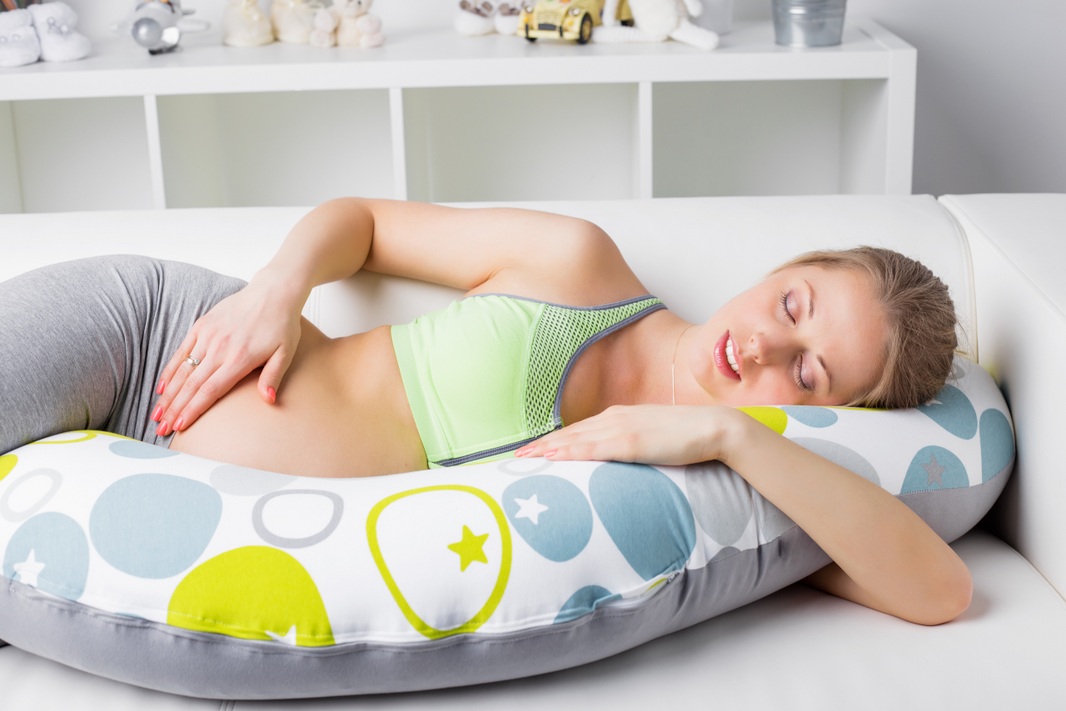
The best sleeping position for lower back pain is on your side with your knees slightly bent and a pillow between your knees. Mayo Clinic recommends drawing your legs up slightly toward your chest and placing a pillow between your legs to align the spine, pelvis and hips. Sleeping on your back with a pillow under your knees is the second-best option.
Side sleeping with a pillow between the knees
Side sleeping with a knee pillow keeps the top leg from sliding forward and rotating the pelvis. This keeps the lower back straight and reduces strain on the discs and joints. Bend your knees slightly, but do not pull them all the way to your chest, since Cleveland Clinic advises against the tight fetal position for lower back pain. A contoured knee pillow such as The Knee T stays in place all night thanks to its strap.
Back sleeping with a pillow under the knees
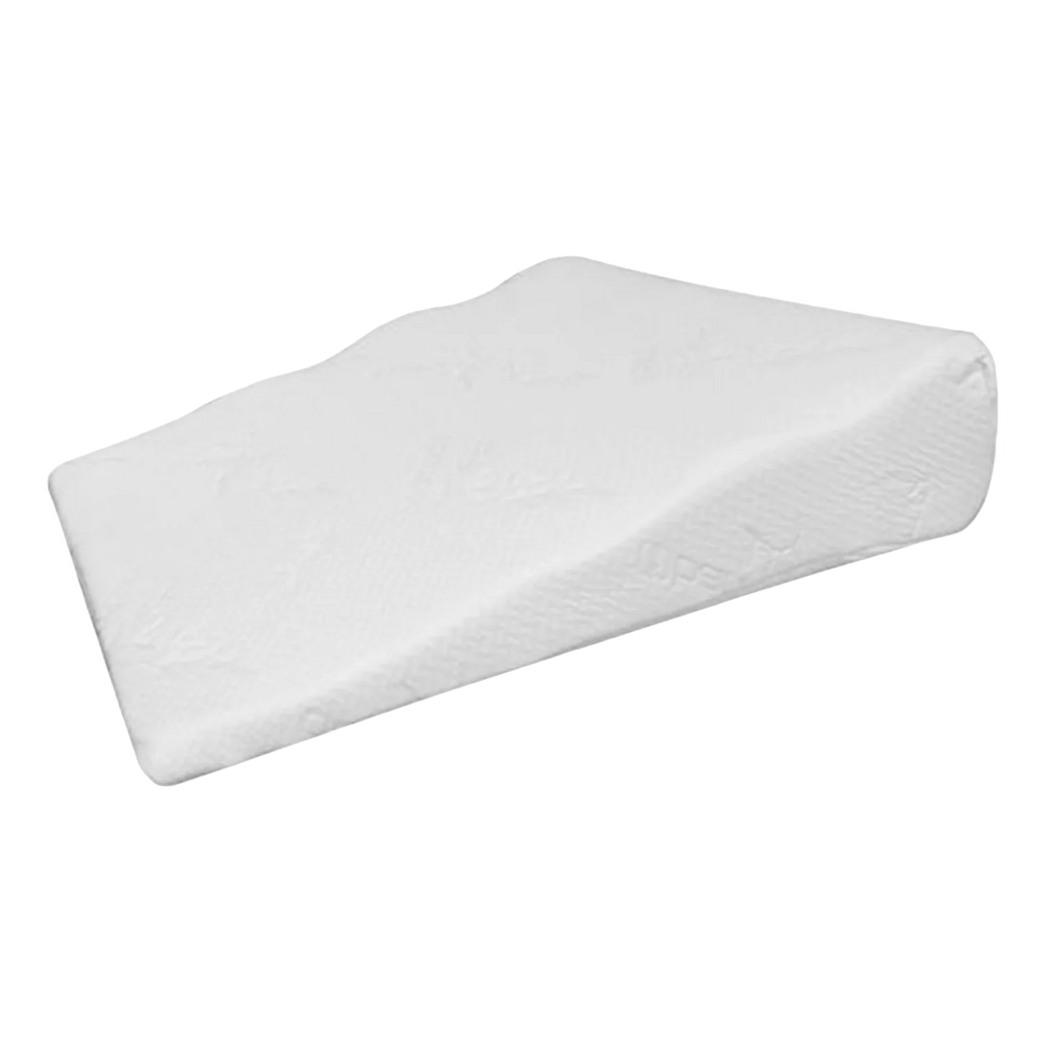
Back sleeping with a pillow under the knees relaxes the back muscles and keeps the natural curve of the lower spine. Mayo Clinic adds that a small rolled towel under the waist can give extra support. For more lift, a leg support such as The Angle positions your legs at an angle that takes weight off the lower back.
Stomach sleeping (if you cannot avoid it)
Stomach sleeping is the hardest position on the back because it flattens the natural curve of the spine and twists the neck. If you can only fall asleep this way, place a thin pillow under your hips and lower stomach, and use a very flat head pillow or none at all.
Want a deeper look at each position? Read our detailed guide: Best Sleeping Positions for Lower Back Pain Relief.
Side, back or stomach: sleeping positions compared
Side and back sleeping are both good for lower back pain when you add the right pillow support; stomach sleeping is the least recommended. Use this table to find your best setup.
| Position | Rating | How to support it | Best for | Recommended product |
|---|---|---|---|---|
| Side, knees slightly bent | Best | Pillow between the knees; head pillow that fills the space between ear and shoulder | Disc problems, sciatica, hip pain, pregnancy | The Knee T |
| Back | Very good | Pillow or leg support under the knees; optional rolled towel under the waist | Muscle tension, general lower back pain | The Angle |
| Reclined / upper body raised | Good for some people | Upper-body wedge plus leg support under the knees | People who feel better in a recliner, reading in bed | The Angle Body System |
| Stomach | Not recommended | Thin pillow under hips and lower stomach; flat or no head pillow | Only if no other position works | — |
| Fetal (knees to chest) | Avoid | Straighten the legs slightly and add a knee pillow | — | — |
How to use pillows to support your lower back
The right pillow setup fills the gaps between your body and the mattress so your spine stays straight. Follow these steps for your position:
Side sleepers: step by step
- Lie on your side and bend both knees slightly, without pulling them to your chest.
- Place a pillow between your knees so your top leg is level with your hip. A contoured knee pillow keeps your legs, hips and spine in a neutral position.
- Adjust your head pillow so your nose lines up with the center of your chest.
- Add a small pillow under your waist if there is a gap between your waist and the mattress.
- Optional: hug a pillow or use a full-length body pillow to keep your shoulders from rolling forward.
Back sleepers: step by step
- Lie flat on your back with your arms relaxed at your sides.
- Place a pillow or leg support under your knees so they are gently bent. This relaxes the lower back muscles.
- Add a small rolled towel under your waist if your lower back does not touch the mattress.
- Use a head pillow that keeps your head in line with your chest, not pushed forward.
How to get out of bed without hurting your back
Use the "log roll" technique recommended by Cleveland Clinic: turn onto your side, bend both knees, swing your legs over the edge of the bed, and push yourself up with your hands. Avoid bending forward at the waist when you sit up.
For more practical tips, read 4 Essential Strategies for Managing Lower Back Pain While Sleeping.
Can sleeping wrong cause back pain?
Yes, sleeping in a poor position can cause or worsen lower back pain, especially when you sleep on your stomach, twist your torso, or sleep on a sagging mattress. Cleveland Clinic notes that when patients have pain they know is related to sleep, stomach sleeping is usually the culprit.
Signs that your sleep is causing your back pain:
- You wake up with pain that eases once you have been moving around for a while.
- The pain is worse in the morning than in the evening.
- You often wake up in the same twisted or stomach-down position.
- Your mattress has visible dips or no longer feels supportive.
The fix is usually a combination of a better position, the right pillow support and a supportive mattress. Our guide Optimizing Sleep Quality: Discovering the Best Sleeping Positions explains how each position affects your whole body.
What mattress is best for lower back pain?
A medium-firm mattress is usually best for lower back pain. A randomized, double-blind trial published in The Lancet in 2003 found that people with chronic non-specific low back pain who slept on a medium-firm mattress had less pain-related disability than those on a firm mattress.
What matters most is that the mattress does not sag. Cleveland Clinic recommends a mattress and base that do not sink in the middle. A mattress that is too soft lets the hips drop, and one that is too hard creates pressure points at the shoulders and hips.
If your mattress is still in good shape but feels too hard, a supportive foam topper can add comfort without losing support. The SoCool Foam Mattress Topper uses a memory foam base layer to distribute weight evenly and help align the spine.
Bedtime and morning habits that protect your back
Small daily habits reduce lower back pain at night as much as your position does. The most useful are:
- Stretch gently before bed: knee-to-chest stretches, pelvic tilts and child's pose relax the lower back muscles.
- Stay active during the day: NINDS notes that regular exercise can help prevent low back pain and reduce how much it affects daily life.
- Keep a regular sleep schedule: going to bed and waking up at the same time improves sleep quality, which affects how you feel pain.
- Take a warm shower before bed: heat relaxes tight muscles.
- Move slowly in the morning: use the log roll to get up, then walk or stretch for a few minutes before bending or lifting.
Looking for a long-term plan? Read How to End Your Back Pain Once and for All.
Why your daytime sitting affects your night
How you sit during the day directly affects how your back feels at night. Long hours in a car or office chair without lower back support load the discs and tighten the hip muscles, and that tension carries into bedtime. Cleveland Clinic recommends sitting with a back support at the curve of your lower back and with your hips and knees at right angles.
If you drive or sit for long periods, a custom-fit seat support helps you keep good posture. The McCarty's Premium Sacro-Ease Back Support is designed for car seats and helps reduce strain on the spinal discs and keep the spine aligned during long drives and flights.
Upper back pain and other related issues
Lower back pain often comes with other problems that also affect sleep. These guides cover the most common ones:
- Upper back pain between the shoulder blades: often caused by posture and muscle tension. See Exercises and Stretches to Ease Upper Back Pain Between Shoulder Blades.
- Back pain and digestion: back pain and constipation can be connected. Learn more in Back Pain & Constipation: How One Affects the Other.
- Sciatica: pain that travels from the lower back down the leg needs a slightly different pillow setup. See Does a Sciatica Pillow Improve Sleep Quality?
Recommended products for lower back pain
These Back Support Systems products are designed to support the positions recommended in this guide. All are made in the USA.


When to see a doctor about lower back pain
Most lower back pain improves with self-care, better sleep positions and activity. See a doctor if:
- The pain lasts more than a few weeks or keeps getting worse.
- Pain spreads down one or both legs, especially below the knee.
- You feel numbness, tingling or weakness in your legs.
- The pain started after a fall or injury.
- You have unexplained weight loss or a fever along with back pain.
Get emergency care right away if back pain comes with new loss of bladder or bowel control, or numbness in the groin or inner thighs.
This article is for informational purposes only and is not a substitute for professional medical advice. Always consult your doctor or a qualified health provider about a medical condition.
Frequently asked questions
What is the best sleeping position for lower back pain?
The best sleeping position for lower back pain is on your side with your knees slightly bent and a pillow between your knees. This keeps the spine, pelvis and hips aligned. Sleeping on your back with a pillow under your knees is also a good option. Avoid sleeping on your stomach.
Should I put a pillow under my knees for lower back pain?
Yes. If you sleep on your back, a pillow under your knees relaxes the back muscles and keeps the natural curve of your lower spine. Mayo Clinic and Cleveland Clinic both recommend it. A wedge-shaped leg support gives more consistent lift than a regular pillow.
Is sleeping on your side good for lower back pain?
Side sleeping is good for lower back pain when you keep your knees slightly bent and place a pillow between them. Without a knee pillow, the top leg can pull the pelvis forward and twist the lower back. Avoid pulling your knees all the way to your chest.
Is a firm or soft mattress better for lower back pain?
A medium-firm mattress is usually better than a very firm or very soft one. A 2003 trial in The Lancet found that people with chronic low back pain had less pain-related disability on a medium-firm mattress than on a firm one. The mattress should not sag in the middle.
Why does my lower back hurt when I wake up?
Lower back pain in the morning is usually caused by a sleeping position that twists or arches the spine, a mattress that sags, or stiffness after hours without moving. If the pain eases once you start moving, your sleep setup is a likely cause.
How long does back pain from sleeping wrong last?
Back pain from sleeping in a bad position usually improves within a few hours to a few days once you change your position and stay gently active. If the pain lasts more than a few weeks, spreads down your leg, or comes with numbness or weakness, see a doctor.
Can a knee pillow help with lower back pain?
Yes. A knee pillow keeps the legs apart and level with the hips while you sleep on your side, which keeps the pelvis and lower spine aligned. A contoured knee pillow with a strap, like The Knee T, stays in place when you move during the night.
Is it bad to sleep on your stomach with lower back pain?
Stomach sleeping is the least recommended position for lower back pain because it flattens the natural curve of the spine and twists the neck. If you cannot sleep any other way, place a thin pillow under your hips and lower stomach and use a flat head pillow.
Sources
- Mayo Clinic. Sleeping positions that reduce back pain.
- Cleveland Clinic. Best Sleeping Positions for Pain.
- Cleveland Clinic. Low Back Pain Coping Tips.
- World Health Organization. Low back pain fact sheet.
- National Institute of Neurological Disorders and Stroke. Back Pain.
- Kovacs FM, et al. Effect of firmness of mattress on chronic non-specific low-back pain: randomised, double-blind, controlled, multicentre trial. The Lancet, 2003.