



Quick answer
To reduce acid reflux at night, raise your head and upper body 6 to 9 inches with a bed wedge or blocks under the head of the bed, start the night on your left side, and wait at least three hours after eating before lying down. Stacking regular pillows under your head is not effective, because it bends you at the waist instead of raising your whole torso.
Key takeaways
- GERD is common: about 20% of people in the United States have it, according to the National Institute of Diabetes and Digestive and Kidney Diseases (NIDDK).
- Elevation works when it raises the torso: Mayo Clinic recommends raising the head of the bed 6 to 9 inches; NIDDK suggests 6 to 8 inches using a foam wedge.
- Left side sleeping helps: a 2022 study in the American Journal of Gastroenterology found less nighttime acid exposure on the left side than on the right side or back.
- Timing matters: wait at least three hours after eating before lying down, says Mayo Clinic.
- Common triggers include large or late meals, fatty foods, alcohol, chocolate, caffeine and peppermint.
- Chest pain with shortness of breath or arm or jaw pain needs emergency care, since it may be a heart attack.
What is acid reflux (GER vs. GERD)?
Acid reflux, or gastroesophageal reflux (GER), happens when stomach contents flow back up into the esophagus, the tube that connects the mouth and the stomach. Gastroesophageal reflux disease (GERD) is a more severe, long-lasting form in which reflux causes repeated bothersome symptoms or complications over time, according to NIDDK.
The most common symptom is heartburn, a burning feeling in the chest that often comes after eating and may be worse at night or when lying down. Other symptoms include a sour taste or food coming back up into the throat and trouble swallowing. At night, reflux can also cause an ongoing cough, hoarseness or worse asthma symptoms, says Mayo Clinic.
Why is acid reflux worse at night?
Acid reflux is often worse at night because lying flat removes the help of gravity, so stomach acid can flow into the esophagus more easily and stay there longer. Eating a large meal or eating late in the evening adds pressure on the stomach at exactly the moment you lie down.
- Lying flat: the stomach and esophagus are at the same level.
- Late or large meals: Mayo Clinic lists these among the factors that make reflux worse.
- Sleeping position: lying on the back or right side is linked to more acid exposure than the left side.
- Pressure on the abdomen: excess weight, pregnancy and tight clothing push stomach contents upward.
Read more in How To Get A Good Night's Sleep With Acid Reflux.
What is the best sleeping position for acid reflux?
The best sleeping position for acid reflux is on your left side with your head and upper body raised. Mayo Clinic recommends starting the night on your left side to make reflux less likely.
A 2022 study of 57 people with nighttime reflux, published in the American Journal of Gastroenterology, found that acid exposure in the esophagus was lower when people slept on their left side than when they slept on their right side or back, and acid cleared faster in the left-side position.
Combining both strategies, left side plus elevation, gives gravity and anatomy the best chance to keep acid in the stomach.
Sleeping positions for acid reflux compared
Left side sleeping with the upper body raised is the best combination for nighttime reflux. Use this table to adjust your setup.
| Position | Rating for reflux | Why | How to improve it | Recommended product |
|---|---|---|---|---|
| Left side, upper body raised | Best | Less acid exposure and faster clearance; gravity keeps acid down | Wedge from the waist up; pillow between the knees | Side Sleeping Wedge Pillow |
| Back, upper body raised | Good | Elevation reduces reflux even without side sleeping | Wedge or raised head of bed 6–9 inches | Acid Reflux Wedge |
| Right side | Less recommended | Linked to more acid exposure than the left side | Switch to the left side; keep elevation | — |
| Flat on the back | Poor | No help from gravity | Add a wedge | — |
| Stomach | Poor | Pressure on the abdomen | Change position; use a body pillow to stay on your side | — |
How to elevate your upper body correctly
Elevation only works when it raises your whole torso from the waist up, not just your head. Mayo Clinic notes that raising your head with additional pillows isn't effective, because it bends your body at the waist and can increase pressure on the stomach.
There are two effective ways to elevate:
- Raise the head of the bed. Place sturdy blocks under the legs at the head end of the bed to lift it 6 to 9 inches (Mayo Clinic). The whole mattress tilts at a gentle angle.
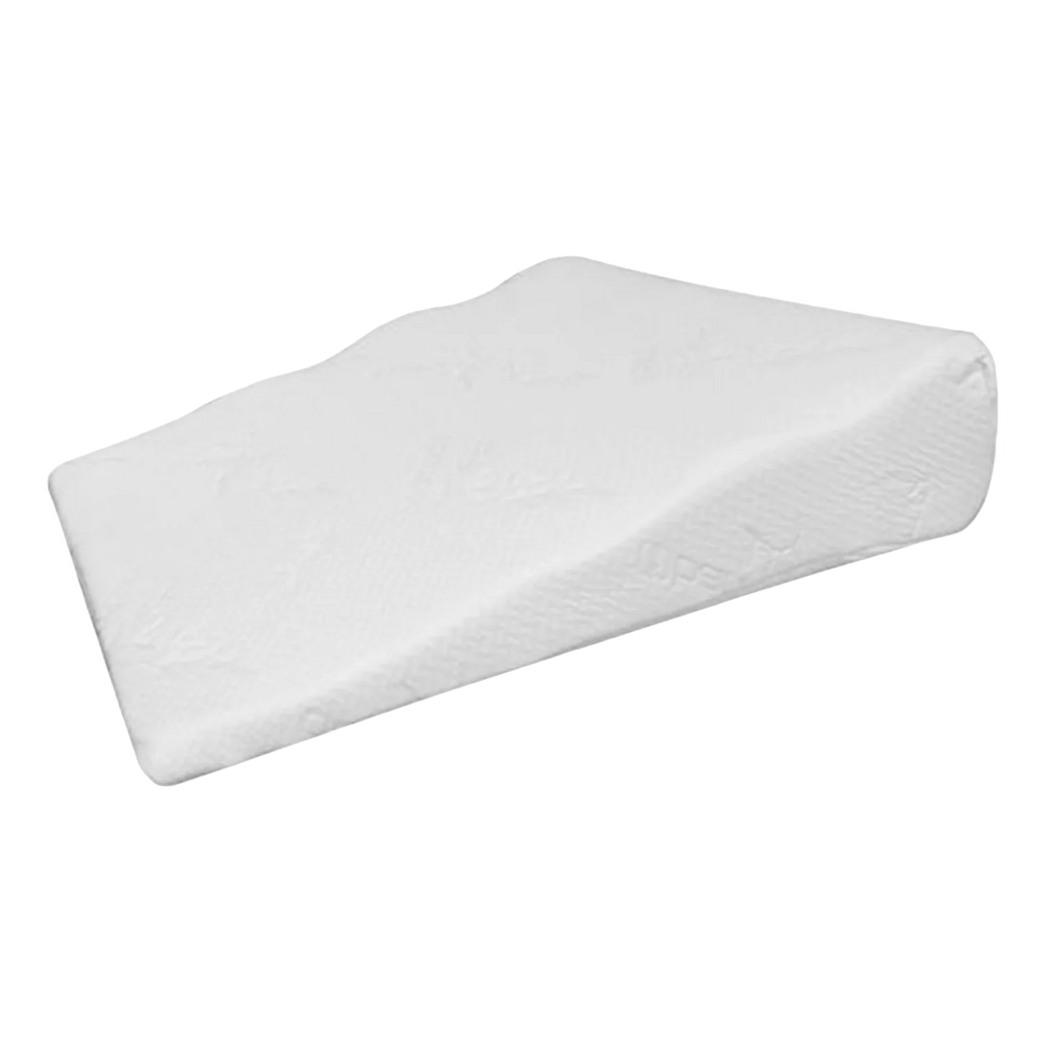
- Use a foam wedge. A wedge placed on the mattress, or between the mattress and box spring, raises your head and upper back. NIDDK recommends raising your head 6 to 8 inches off the bed this way.
A wedge is often the easier option: it needs no tools, works in any bed, travels with you and can be removed when you don't need it. It also works if you share a bed with someone who doesn't want the whole mattress tilted.
How to choose and use an acid reflux wedge pillow
A good acid reflux wedge raises your head and torso at a steady, gentle angle, is long enough to support your back from the waist up, and is firm enough not to flatten during the night.
What to look for
- Height: enough to raise your head about 6 to 8 inches or more.
- Length: the slope should start at your waist, not your shoulders.
- Firm core with a comfortable top layer: a supportive base with memory foam on top keeps the angle stable and comfortable.
- Width: wider wedges let you turn onto your side without rolling off.
- Removable, washable cover for easy cleaning.
- Side-sleeping design: if you sleep on your side, look for a wedge system that also supports your legs.
How to sleep on a reflux wedge
- Place the wedge at the head of the bed with the thin end toward your waist.
- Lie back so your torso rests on the slope, then turn onto your left side if you can.
- Add a thin pillow or contour pillow for your neck if needed.
- Put a pillow under or between your knees to stop sliding down.
- Give yourself a few nights to get used to the incline.
For a detailed buying guide, read How to Find Your Perfect Acid Reflux Wedge Pillow. Compare wedges with other pillow types in our Pillow Buying Guide.
Bedtime habits that reduce nighttime reflux
What you do in the hours before bed affects nighttime reflux as much as your position. Mayo Clinic recommends:
- Wait at least three hours after eating before lying down or going to bed.
- Eat a smaller dinner and avoid large meals late at night.
- Skip evening triggers: alcohol, chocolate, caffeine, fatty foods and peppermint.
- Eat slowly and chew thoroughly.
- Wear loose clothing to bed; tight waistbands put pressure on the stomach.
- Start the night on your left side with your upper body raised.
Natural remedies and diet changes
Lifestyle changes are the first step for managing acid reflux. NIDDK and Mayo Clinic recommend:
- Maintain a healthy weight: excess weight puts pressure on the abdomen and pushes stomach acid up.
- Stop smoking: smoking weakens the valve between the esophagus and the stomach.
- Identify your food triggers: keep a simple food and symptom diary for two weeks.
- Elevate your upper body every night, not only on bad nights.
For more ideas, read Home Remedies for Acid Reflux: Natural Ways to Ease Symptoms.
Treatment options
If lifestyle changes are not enough, a doctor may recommend over-the-counter or prescription medicines that reduce or neutralize stomach acid. In some cases, further tests or procedures are needed. Mayo Clinic advises seeing a doctor if you need over-the-counter heartburn medicine more than twice a week.
Learn more in Acid Reflux How to Treat: Effective Strategies for Managing Symptoms.
Recommended products for acid reflux
These Back Support Systems wedges are designed to raise your upper body at a gentle, steady angle. All are made in the USA.


When to see a doctor about acid reflux
Occasional heartburn is common. Mayo Clinic recommends seeing a doctor if you have severe or frequent reflux symptoms, or if you take over-the-counter heartburn medicine more than twice a week. Also see a doctor if you have trouble swallowing, unexplained weight loss, or vomiting.
Get emergency care right away if you have chest pain, especially with shortness of breath or pain in the arm or jaw. These may be signs of a heart attack.
This article is for informational purposes only and is not a substitute for professional medical advice. Always consult your doctor or a qualified health provider about a medical condition.
Frequently asked questions
What is the best sleeping position for acid reflux?
The best position is on your left side with your head and upper body raised 6 to 9 inches. Mayo Clinic recommends starting the night on your left side, and research shows less nighttime acid exposure on the left side than on the right side or back.
Does sleeping on a wedge pillow help acid reflux?
Yes. A wedge raises your head and upper body so gravity helps keep stomach acid in the stomach. NIDDK recommends using a foam wedge to raise your head 6 to 8 inches off the bed.
Can I just use extra pillows instead of a wedge?
Stacking pillows under your head is not a good substitute. Mayo Clinic notes that raising your head with additional pillows isn't effective, because it bends you at the waist instead of raising your whole torso. A wedge or raising the head of the bed works better.
How high should I elevate my head for acid reflux?
Aim to raise your head and upper body about 6 to 9 inches. Mayo Clinic recommends raising the head of the bed 6 to 9 inches, and NIDDK suggests 6 to 8 inches. The incline should start at your waist.
Why is sleeping on the left side better for reflux?
The stomach sits on the left side of the body, so lying on your left side is thought to keep stomach contents below the entrance to the esophagus. A 2022 study found less acid exposure and faster acid clearance on the left side than on the right side or back.
How long should I wait to lie down after eating?
Wait at least three hours after eating before lying down or going to bed, according to Mayo Clinic. Eating a smaller evening meal also helps.
What foods should I avoid before bed with acid reflux?
Common triggers include alcohol, chocolate, caffeine, fatty or fried foods and peppermint. Triggers vary from person to person, so a short food and symptom diary helps you find yours.
When is heartburn an emergency?
Chest pain is an emergency if it comes with shortness of breath or pain in the arm or jaw, because it may be a heart attack. Call emergency services right away.
Sources
- Mayo Clinic. GERD: Symptoms and causes.
- Mayo Clinic. GERD: Diagnosis and treatment.
- National Institute of Diabetes and Digestive and Kidney Diseases (NIDDK). Definition & Facts for GER & GERD.
- NIDDK. Treatment for GER & GERD.
- Schuitenmaker JM, et al. Associations Between Sleep Position and Nocturnal Gastroesophageal Reflux. American Journal of Gastroenterology, 2022. (Summary: Healio)


