



Quick answer
Sciatica is pain that travels along the sciatic nerve, from the lower back through the buttock and down one leg. It is usually caused by a herniated disc or bone overgrowth pressing on a nerve root, and most cases improve within 4 to 6 weeks. The best relief comes from staying gently active, stretching, using heat or ice, and sleeping on your back with a pillow under your knees or on your side with a pillow between your knees.
Key takeaways
- Sciatica is common: between 10% and 40% of people experience it at some point in their lives, according to a clinical review published on the NIH's StatPearls.
- It usually affects one side of the body and follows a path from the lower back down the back of the thigh and calf.
- Most cases get better on their own: sciatica often resolves in 4 to 6 weeks without long-term problems.
- Movement beats bed rest: too much rest can make sciatica worse and slow recovery, says Cleveland Clinic.
- Sleep position matters: back sleeping or side sleeping with a pillow between the knees reduces pressure on the nerve.
- Get emergency care if sciatica comes with loss of bladder or bowel control, numbness in the groin, or sudden leg weakness.
What is sciatica?
Sciatica is pain that travels along the path of the sciatic nerve, which runs from the lower back through the buttocks and down each leg. The sciatic nerve is the largest nerve in the body. Sciatica happens when this nerve, or one of the nerve roots that form it in the lower spine, is irritated or compressed.
Sciatica is a symptom, not a disease on its own. It tells you that something is putting pressure on the nerve. It is also less common than general back pain: the Sleep Foundation notes that only about 5% of people who report lower back pain actually have sciatica.
What does sciatica feel like?
Sciatica usually feels like pain that starts in the lower back or buttock and shoots down the back of one leg, sometimes to the foot. Mayo Clinic describes pain that can range from a mild ache to a sharp, burning sensation or a jolt similar to an electric shock.
The most common symptoms are:
- Radiating pain from the lower back through the buttock and down the thigh and calf.
- Pain on one side of the body; sciatica rarely affects both legs.
- Numbness or tingling in the leg or foot.
- Muscle weakness in the affected leg.
- Pain that gets worse with long periods of sitting, coughing or sneezing.
What causes sciatica?
The most common cause of sciatica is a herniated disc or an overgrowth of bone (bone spur) that presses on a nerve root in the lower spine, according to Mayo Clinic. The pressure causes inflammation, pain and often numbness in the affected leg.
Other causes include spinal stenosis (narrowing of the spinal canal) and, less often, tumors or diseases such as diabetes that damage the nerve.
Risk factors for sciatica
- Age: age-related changes in the spine, such as herniated discs and bone spurs, are common causes. Mayo Clinic notes that people ages 20 to 50 are the most likely to have herniated discs, and the Sleep Foundation says people in their 40s are the most likely to experience sciatica.
- Excess weight: extra body weight increases stress on the spine.
- Heavy lifting, twisting or driving: jobs that require twisting the back, carrying heavy loads or driving a motor vehicle for long periods may contribute to herniated discs.
- Prolonged sitting: people who sit for long periods and move little are more likely to develop sciatica.
- Diabetes: it increases the risk of nerve damage.
How long does sciatica last?
Most cases of sciatica last less than 4 to 6 weeks and resolve without long-term complications, even without medical treatment, according to a clinical review on the NIH's StatPearls. Cleveland Clinic also notes that sciatica often doesn't last longer than six weeks.
When a herniated disc is the cause, symptoms usually clear up with treatment in a few weeks to months, says Mayo Clinic. Sciatica can come back, which is why prevention habits matter once the pain is gone.
How to relieve sciatica pain at home
The most effective home relief for sciatica combines light activity, gentle stretching and heat or ice. Most people start to feel better with time and these simple steps.
- Stay gently active. Short periods of rest may help in the first day or two, but Cleveland Clinic warns that too much rest can make pain worse and slow recovery. Short walks keep you flexible.
- Use ice, then heat. Ice may help reduce pain and swelling in the first few days; heat may help after that. Use either for about 20 minutes at a time.
- Stretch several times a day. A Cleveland Clinic physical therapist recommends stretching for one to two minutes three to five times a day, including right before bed. Piriformis stretches and the cobra pose are good options.
- Avoid sitting for long periods. Get up and move often, and use lower back support when you sit.
- Improve your sleep setup. Use the positions and pillow support described below.
- Ask about pain relief. Over-the-counter anti-inflammatory medicines can help some people. Ask a pharmacist or doctor what is safe for you.
For a deeper look at home treatments, read Finding Relief from Sciatica Pain: Effective Strategies Explained.
Sciatica relief options compared
Different relief methods work best at different stages of sciatica. Use this table to choose what to try first.
| Option | When to use it | How to do it | What it helps |
|---|---|---|---|
| Ice | First few days | About 20 minutes at a time, wrapped in a cloth | Pain and swelling |
| Heat | After the first few days | About 20 minutes at a time; warm bath before bed | Tight muscles, stiffness |
| Gentle stretching | Daily, including before bed | 1–2 minutes, 3–5 times a day (piriformis stretch, cobra pose) | Pressure on the nerve, flexibility |
| Light activity / walking | From day 2–3 onward | Short walks; avoid long bed rest | Recovery speed, stiffness |
| Sleep support | Every night | Knee pillow (side) or leg wedge (back) | Night pain, sleep quality |
| Sitting support | Work, driving, travel | Lumbar support; stand up often | Flare-ups from sitting |
| Medical care | Pain over a week, severe, or worsening | See a doctor or physical therapist | Persistent or severe sciatica |
How to sleep with sciatica
The best sleeping positions for sciatica are on your back with a pillow under your knees, or on your side with a pillow between your knees. Both positions keep the spine aligned and reduce pressure on the sciatic nerve. Cleveland Clinic recommends sleeping on the side opposite your pain.
Sciatica often feels worse at night because lying down for long periods, or lying in certain positions, can add pressure on the lower back and the nerve.
| Position | Rating for sciatica | How to support it | Recommended product |
|---|---|---|---|
| Back | Very good | Pillow or leg support under the knees | The Angle |
| Side (opposite the pain) | Very good | Knees slightly bent, pillow between the knees; optional pillow behind the back | The Knee T |
| Slightly bent forward / reclined | Good if stenosis is the cause | Raise the upper body and support the legs | The Angle Body System |
| Side with body pillow | Good (and during pregnancy) | Full-length pillow between the knees and against the chest | Better Body Pillow |
| Stomach | Not recommended | Arches the back and twists the neck; thin pillow under hips if unavoidable | — |
How to set up your bed for sciatica: step by step
- Choose your position: on your back, or on the side opposite your pain.
- Side sleepers: bend your knees slightly and place a pillow between them to align your hips and take pressure off the pelvis. A pillow behind your back adds stability.
- Back sleepers: place a pillow or leg support under your knees to reduce pressure on your back.
- Check your mattress: research suggests a medium-firm mattress is best for lower back pain relief. Avoid mattresses that let your spine sag.
- Stretch before bed: one to two minutes of gentle stretching, or a warm bath, can ease pain before sleep.
- Get up carefully: roll onto your side, swing your legs off the bed and push up with your arms.
Sciatica and general lower back pain share many sleep strategies. For more on positions, read our complete guide: How to Sleep with Lower Back Pain.
Does a sciatica pillow help?
Yes, a pillow that keeps your knees apart or raised can reduce sciatica pain at night by keeping the hips, pelvis and spine aligned. A knee pillow helps side sleepers; a leg wedge helps back sleepers. The key is a pillow that holds its shape all night, since a regular pillow tends to flatten or slip out.
- Knee pillows sit between the knees and keep the top leg level with the hip. The Knee T uses a strap to stay in place when you move.
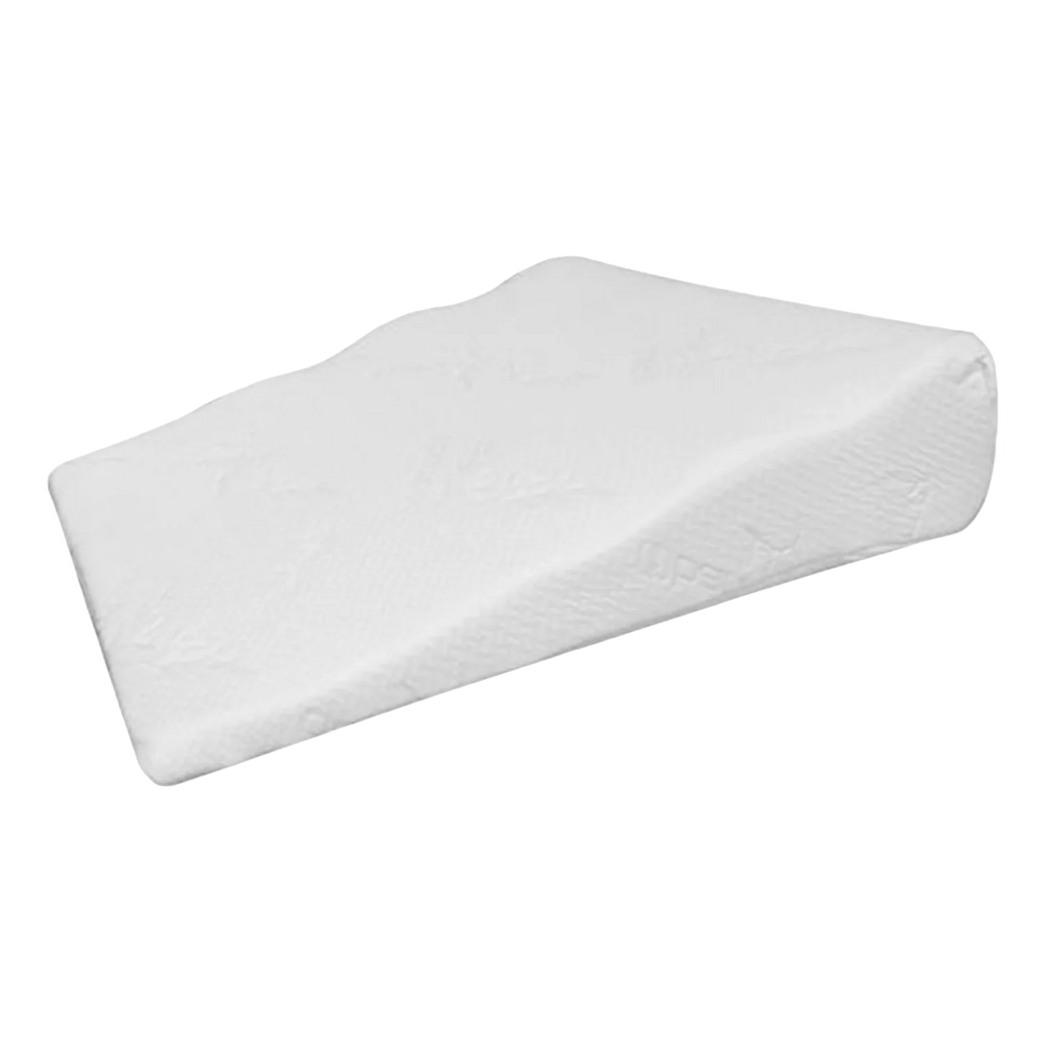
- Leg wedges raise the legs while you lie on your back. The Angle positions the legs at an angle that reduces pressure on the lower back muscles and discs.
- Body pillows support the whole body during side sleeping and are popular during pregnancy.
Learn how to choose and position one in Does a Sciatica Pillow Improve Sleep Quality?
Sitting and driving with sciatica
Long periods of sitting are one of the most common triggers for sciatica flare-ups, because sitting increases pressure on the discs of the lower back. Mayo Clinic recommends a seat with good lower back support, armrests and a swivel base, and a pillow or rolled towel at the small of your back to keep its normal curve.
- Keep your knees and hips level.
- Stand up and walk around often.
- Avoid sitting on a wallet or phone in your back pocket.
- On long drives, stop regularly to stretch.
If you drive often, a seat support designed for the car helps you keep good posture for hours. The McCarty's Premium Sacro-Ease Back Support is a portable lumbar and seat support designed to help with pelvis pain, coccyx pain and sciatica during long drives and flights.
Sciatica during pregnancy
Sciatica can appear during pregnancy as the body changes, weight increases and posture shifts. Many pregnant people feel pain in the lower back and buttock that travels down one leg.
Side sleeping with a pillow between the knees, or with a full-length body pillow, is one of the most comfortable ways to sleep with sciatica during pregnancy. Gentle activity and prenatal stretches can also help. Always talk to your OB-GYN or midwife before starting exercises or taking any medicine.
Read the full guide: Managing Sciatica During Pregnancy: Understanding Causes and Symptoms.
How to prevent sciatica from coming back
Regular exercise, good posture and safe lifting are the best ways to prevent sciatica from returning. Mayo Clinic and the NHS recommend:
- Exercise regularly, with a focus on the core muscles of the abdomen and lower back that support the spine.
- Sit with good posture and lower back support.
- Lift with your legs, not your back: keep your back straight and bend only at the knees.
- Keep a healthy weight to reduce stress on the spine.
- Avoid smoking, which the NHS lists among the habits that help reduce the risk.
- Sleep with support every night, not only during a flare-up.
Recommended products for sciatica
These Back Support Systems products are designed to support the positions recommended in this guide. All are made in the USA.


When to see a doctor about sciatica
Mild sciatica usually goes away over time. Mayo Clinic recommends calling your health care provider if self-care measures don't ease your symptoms or if pain lasts longer than a week, is severe or keeps getting worse.
Get emergency care right away if you have:
- Trouble controlling your bladder or bowels.
- Numbness around the genitals, buttocks or inner thighs.
- Sciatica in both legs.
- Sudden, severe pain in the lower back or leg with numbness or muscle weakness.
- Pain that follows a violent injury, such as a traffic accident.
These can be signs of cauda equina syndrome, a rare but serious condition that needs urgent treatment.
This article is for informational purposes only and is not a substitute for professional medical advice. Always consult your doctor or a qualified health provider about a medical condition.
Frequently asked questions
What is the fastest way to relieve sciatica pain?
The fastest relief usually comes from combining gentle movement, ice in the first few days and heat after that (about 20 minutes at a time), and stretches such as the piriformis stretch. Avoid long periods of sitting or bed rest. If pain is severe or lasts more than a week, see a doctor.
How long does sciatica last?
Most sciatica cases resolve in less than 4 to 6 weeks without long-term problems. When a herniated disc is the cause, symptoms can take a few weeks to a few months to clear up. Sciatica can return, so regular exercise and good posture help prevent new episodes.
What is the best sleeping position for sciatica?
The best sleeping positions for sciatica are on your back with a pillow under your knees, or on your side opposite the painful leg with a pillow between your knees. Both keep the spine aligned and reduce pressure on the sciatic nerve. Most people should avoid sleeping on their stomach.
Should I sleep with a pillow between my legs for sciatica?
Yes. If you sleep on your side, a pillow between your knees aligns your hips and takes pressure off the pelvis and lower back. A contoured knee pillow with a strap, such as The Knee T, stays in place better than a regular pillow.
Is walking good for sciatica?
Yes, gentle walking is usually good for sciatica. Light movement keeps you flexible and strong, while too much rest can make the pain worse and slow recovery. Start with short walks and stop if the pain becomes sharp or spreads.
Is heat or ice better for sciatica?
Ice may help reduce pain and swelling during the first few days of sciatica. After that, heat may help relax tight muscles. Use either one for about 20 minutes at a time, with a cloth between your skin and the ice pack or heat source.
Can sitting too long cause sciatica?
Prolonged sitting is a risk factor for sciatica and a common trigger for flare-ups, because it increases pressure on the lower back discs. Sit with lower back support, keep your hips and knees level, and stand up to move often.
When is sciatica an emergency?
Sciatica is an emergency if it comes with loss of bladder or bowel control, numbness around the genitals or inner thighs, symptoms in both legs, or sudden severe leg weakness. These can be signs of cauda equina syndrome and need immediate medical care.
Sources
- Mayo Clinic. Sciatica: Symptoms and causes.
- Cleveland Clinic. Sciatica.
- Cleveland Clinic. How To Get Better Sleep With Sciatica Pain.
- Davis D, Taqi M, Vasudevan A. Sciatica. StatPearls, National Library of Medicine (NIH).
- NHS. Sciatica.
- Sleep Foundation. Sciatic Nerve Pain Relief at Night.


